The Ancestral Method: What is Riven Wood?
In the modern world, we are accustomed to "sawn" lumber—wood that has been forced through a high-speed blade at a sawmill. While efficient, this process ignores the natural biology of the tree. Riving is the ancient practice of splitting wood along its natural radial lines using axes, wedges, wooden gluts or a froe and a maul.
At DryingTimes, we rive our Red Cedar because we believe that the strongest furniture is built in partnership with the tree, not in opposition to it.
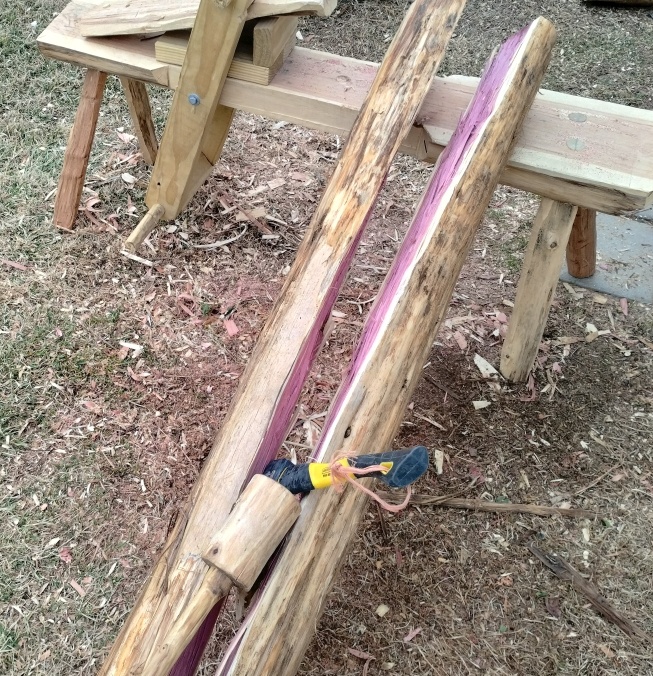
The Physics of Strength: Fiber Continuity
The primary difference between a sawn board and a riven board lies in grain continuity. Imagine a bundle of drinking straws glued together. If you saw through that bundle at an angle, you cut through the straws, leaving them short and weak. This is "run-out," and it is the primary cause of failure in modern furniture.
"A riven piece of wood is as strong as the tree itself, for its fibers have never been severed by a blade; they remain unbroken from end to end."
When we rive a ladder rail or a bench leg, the split follows the fibers perfectly. Because the fibers are never cut, they act as a continuous structural cable. This makes riven wood significantly stronger, more flexible, and more resistant to warping than sawn timber of the same dimensions.
Why Sawn Timber Fails
Sawing creates "cross-grain" exposure. When moisture enters these cut fibers, the wood expands and contracts unevenly. This leads to:
- Checking and Cracking: Sawn wood is prone to deep splits as it dries.
- Structural Weakness: A sawn ladder rung is far more likely to snap under pressure because the internal fibers are disconnected.
- Loss of Character: Sawing hides the "story" of the growth rings, whereas riving reveals the natural undulating path of the tree's life.
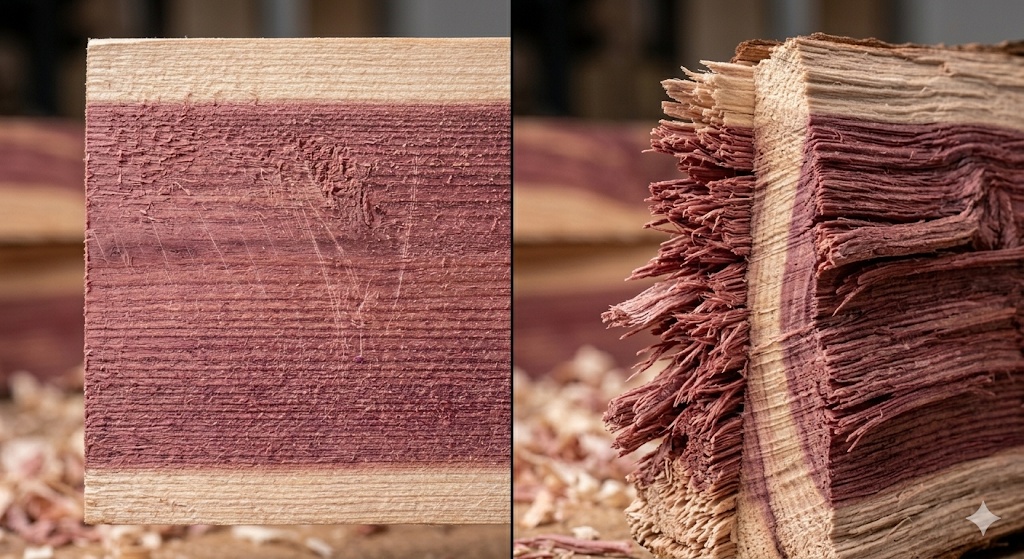
Cedar: The Riven King
Our Eastern Red Cedar is the perfect candidate for this process. It has a straight, predictable grain that splits with a satisfying "crack," yet it possesses a natural rot-resistance that has made it a favorite of heritage builders for centuries. By riving the cedar we capture its maximum strength as it seasons and hardens in its final form.
Conclusion: Furniture with Integrity
When you run your hand along a DryingTimes ladder, you are feeling the actual growth path of a Maryland cedar tree. It is not a flat, anonymous surface from a factory; it is a structural artifact. Choosing riven wood means choosing a piece that values the laws of nature over the speed of the machine.
Explore our collection of riven items in the Main Gallery